
Hotel Marquês de Pombal The Book Fair is back: Where Lisbon Opens Its Pages
Check the latest news
Blog
The Book Fair is back: Where Lisbon Opens Its Pages
May 01 2026
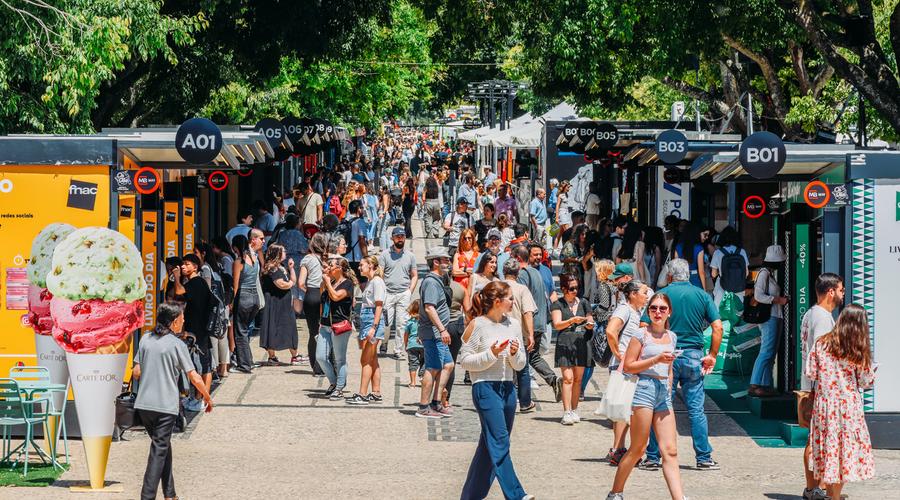
There is something ritualistic about the way Lisbon prepares for the Book Fair. The dark green wooden stalls reappear punctually in Parque Eduardo VII, publishers arrange their catalogues with the precision of someone mounting an exhibition, and the whole city seems to know that its favourite season has finally arrived.
Founded in 1930, the Lisbon Book Fair is one of the oldest in the world and, without question, one of the most deeply rooted in the emotional fabric of a capital. Here you don't just find books, you find generations. Grandparents bringing grandchildren to the same aisles where their own parents once took them. Students discovering for the first time an author who will accompany them for the rest of their lives.
The grounds stretch from the Rotunda to the far end of the park, through a succession of pavilions housing everything from the country's largest publishers to the most hidden second-hand booksellers, from immortal classics to titles fresh off the press. The offer is so vast that many choose to return several days in a row and the city applauds that devotion.
"The Fair is not merely a market; it is a state of mind."
The cultural programme surrounding the Fair is, in itself, reason enough to visit. Literary debates, signing sessions, readings aloud and themed symposiums turn the gardens into a permanent stage for thought. Portuguese and foreign authors share ideas here that later reach every bookshop in the country.
The tradition of the discount, typically ten per cent off the cover price, is another anchor of this celebration. But those who frequent the Fair know that the real value of each visit cannot be measured in euros saved, but in unexpected encounters: the book one wasn't looking for that suddenly seemed written for us alone.
The park lends the fair a dimension that few literary fairs in the world possess: the generous green of the trees, Lisbon's particular light filtered through the branches, the dull roar of the city continuing outside while in here time seems to slow.
This year's edition brings a programme of honour dedicated to the Portuguese-speaking world, with special emphasis on Brazilian and Angolan literature. Round tables on the future of the book in the digital age coexist, without apparent contradiction, with presentations of critical editions and facsimiles of nineteenth-century works. The Fair knows how to be antiquarian and contemporary at once. That balance is, perhaps, its greatest marvel.
For first-time visitors, the advice from regulars is simple: allow time. Not the timed hours of a single afternoon, but the generous time of someone in no hurry to leave. Arrive in the morning, when the aisles are quieter and booksellers are in the mood to talk. Return in the afternoon when, with the heat fading and the light gilding the gardens, the Fair takes on an almost cinematic quality.
More than four hundred stands await the visitor, representing hundreds of publishing imprints. From academic titles to graphic novels, from art books to paperbacks, there is here a representation of the Portuguese publishing world that no bookshop, however large, can replicate. It is, in a sense, the ideal library each reader imagines for themselves, and which, for these few days, actually exists.
Return
Founded in 1930, the Lisbon Book Fair is one of the oldest in the world and, without question, one of the most deeply rooted in the emotional fabric of a capital. Here you don't just find books, you find generations. Grandparents bringing grandchildren to the same aisles where their own parents once took them. Students discovering for the first time an author who will accompany them for the rest of their lives.
The grounds stretch from the Rotunda to the far end of the park, through a succession of pavilions housing everything from the country's largest publishers to the most hidden second-hand booksellers, from immortal classics to titles fresh off the press. The offer is so vast that many choose to return several days in a row and the city applauds that devotion.
"The Fair is not merely a market; it is a state of mind."
The cultural programme surrounding the Fair is, in itself, reason enough to visit. Literary debates, signing sessions, readings aloud and themed symposiums turn the gardens into a permanent stage for thought. Portuguese and foreign authors share ideas here that later reach every bookshop in the country.
The tradition of the discount, typically ten per cent off the cover price, is another anchor of this celebration. But those who frequent the Fair know that the real value of each visit cannot be measured in euros saved, but in unexpected encounters: the book one wasn't looking for that suddenly seemed written for us alone.
The park lends the fair a dimension that few literary fairs in the world possess: the generous green of the trees, Lisbon's particular light filtered through the branches, the dull roar of the city continuing outside while in here time seems to slow.
This year's edition brings a programme of honour dedicated to the Portuguese-speaking world, with special emphasis on Brazilian and Angolan literature. Round tables on the future of the book in the digital age coexist, without apparent contradiction, with presentations of critical editions and facsimiles of nineteenth-century works. The Fair knows how to be antiquarian and contemporary at once. That balance is, perhaps, its greatest marvel.
For first-time visitors, the advice from regulars is simple: allow time. Not the timed hours of a single afternoon, but the generous time of someone in no hurry to leave. Arrive in the morning, when the aisles are quieter and booksellers are in the mood to talk. Return in the afternoon when, with the heat fading and the light gilding the gardens, the Fair takes on an almost cinematic quality.
More than four hundred stands await the visitor, representing hundreds of publishing imprints. From academic titles to graphic novels, from art books to paperbacks, there is here a representation of the Portuguese publishing world that no bookshop, however large, can replicate. It is, in a sense, the ideal library each reader imagines for themselves, and which, for these few days, actually exists.